CAA contributes to expert panels hosted by UN-Habitat and UN Environment
Representatives of the Commonwealth Association of Architects (CAA) participated in two high-level events at the thirteenth session of the World Urban Forum (WUF13), convened by UN-Habitat in Baku, Azerbaijan, reinforcing the growing contribution of Commonwealth professional networks to the global debate on housing, climate resilience and sustainable urban development. WUF13, held under the theme “Housing the World: Safe and Resilient Cities and Communities”, brought together more than 58,000 participants from 176 countries, making it the largest World Urban Forum to date.

CAA Immediate Past President Peter Oborn contributed to two specialist panels. The first, hosted by the UN-Habitat Policy and Legislation Section and the Institute of Advanced Legal Studies, explored the role of sustainable legal frameworks in advancing the right to adequate housing and strengthening national housing systems. Discussions focused on the regulatory and governance challenges facing rapidly urbanising countries and the importance of legislative reform in enabling more inclusive and sustainable urban development.
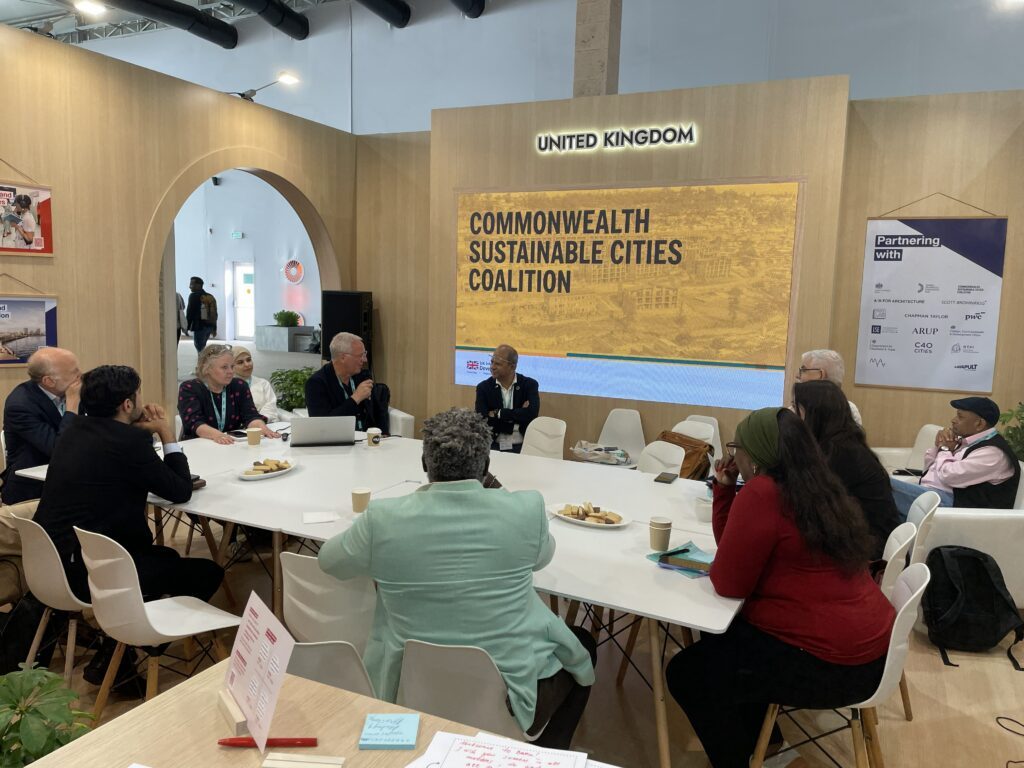
The second event, jointly convened by UN-Habitat, the United Nations Environment Programme (UNEP), the Global Alliance for Buildings and Construction (GlobalABC) and partners, examined progress over the ten years since the adoption of both the Paris Agreement and the New Urban Agenda. The session highlighted the increasingly central role of housing in climate mitigation, adaptation and resilience, and explored practical pathways for aligning housing, climate and urban development agendas. Mr Oborn presented reflections on the work of the Commonwealth Sustainable Cities Coalition (CSCC) Pilot and its relevance to emerging international initiatives, including the Belém Call for Sustainable and Affordable Housing.
World Cities Report 2026 and Baku Call to Action reinforce key findings of the Commonwealth Sustainable Cities Coalition Pilot ahead of CHOGM 2026.
The Forum also saw the launch of UN-Habitat’s World Cities Report 2026: The Global Housing Crisis – Pathways to Action, which warns that up to 3.4 billion people worldwide now lack access to adequate housing and identifies affordability, displacement, informality, climate vulnerability and declining liveability as the defining housing challenges of the twenty-first century. The report calls for integrated, multisectoral responses that link housing, planning, finance, governance and climate action.
These themes were further reinforced through the adoption of the Baku Call to Action, which urges governments, international agencies, professional bodies and civil society to place housing at the centre of sustainable development, strengthen local implementation capacity, improve integrated planning and governance, and accelerate action on climate-resilient and affordable housing. The Call also highlights the importance of professional capacity-building, evidence-based decision-making and stronger multilevel governance arrangements.
WUF13 highlights the importance of the work of the Commonwealth Sustainable Cities Coalition in the run-up to CHOGM 2026
Many of the priorities identified in both the World Cities Report 2026 and the Baku Call to Action closely align with the findings of the Commonwealth Sustainable Cities Coalition Pilot, undertaken by the CAA and partners. The CSCC’s work on integrated planning, housing systems, urban finance, legislative reform and professional capacity-building has consistently highlighted the need for more joined-up approaches capable of responding to rapid urbanisation, climate risk and growing housing deficits across the Commonwealth.
The discussions in Baku also have direct relevance to preparations for the forthcoming Commonwealth Heads of Government Meeting (CHOGM) in Antigua and Barbuda. The publication of the World Cities Report 2026 and adoption of the Baku Call to Action underscore many of the challenges already identified through the CSCC Pilot, including the need for integrated approaches to housing, planning, urban finance, climate resilience and capacity development. As Commonwealth countries seek practical pathways to deliver existing commitments under the Sustainable Development Goals, the Paris Agreement and the New Urban Agenda, the CSCC provides a ready-made platform for implementation, partnership and peer learning. WUF13 therefore not only highlighted the scale of the global housing challenge but also reinforced the growing relevance of Commonwealth-led action in shaping more sustainable, resilient and inclusive urban futures.