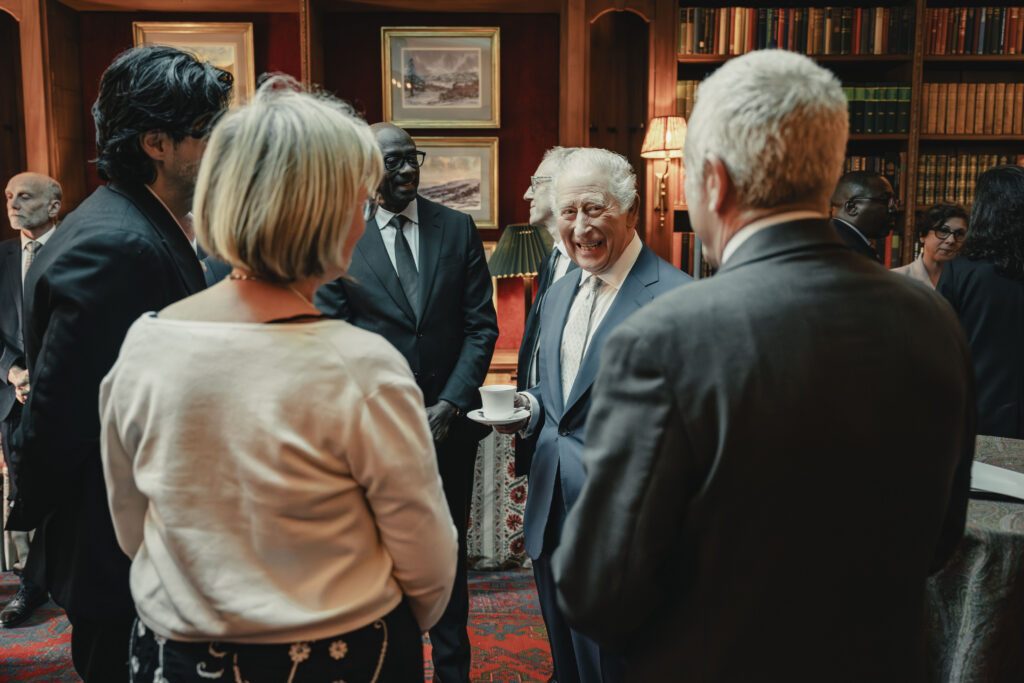
The Commonwealth Sustainable Cities Coalition (CSCC) was represented at a two-day workshop hosted by The King’s Foundation at Dumfries House, Ayrshire, Scotland, on 20–21 April 2026, bringing together senior Commonwealth figures, built-environment professionals and technology innovators to address one of the defining development challenges of our time: rapid and unplanned urban growth.
The event marked the launch of the Harmonious Urban Growth programme, a new three-year partnership designed to help cities across the Commonwealth manage rapid urban expansion while improving the health of people and planet. The programme builds directly on The King’s Foundation’s Rapid Planning Toolkit, a practical methodology developed with Commonwealth partners in response to the Declaration on Sustainable Urbanisation adopted at CHOGM 2022 in Kigali, and will extend that toolkit through advanced computational methods, open-source spatial analysis tools, and field testing in Commonwealth cities beginning with Zambia and Belize.
The roundtable brought together a distinguished gathering of Commonwealth leaders and representatives, including the Vice President of Guyana and the High Commissioners for Australia and Rwanda, reflecting the growing importance being attached to sustainable urbanisation across the Commonwealth. Their presence underlined that the challenge of rapid and unplanned urban growth, and the question of how to structure city expansion before informal settlement patterns become irreversible, is firmly on the Commonwealth political agenda.
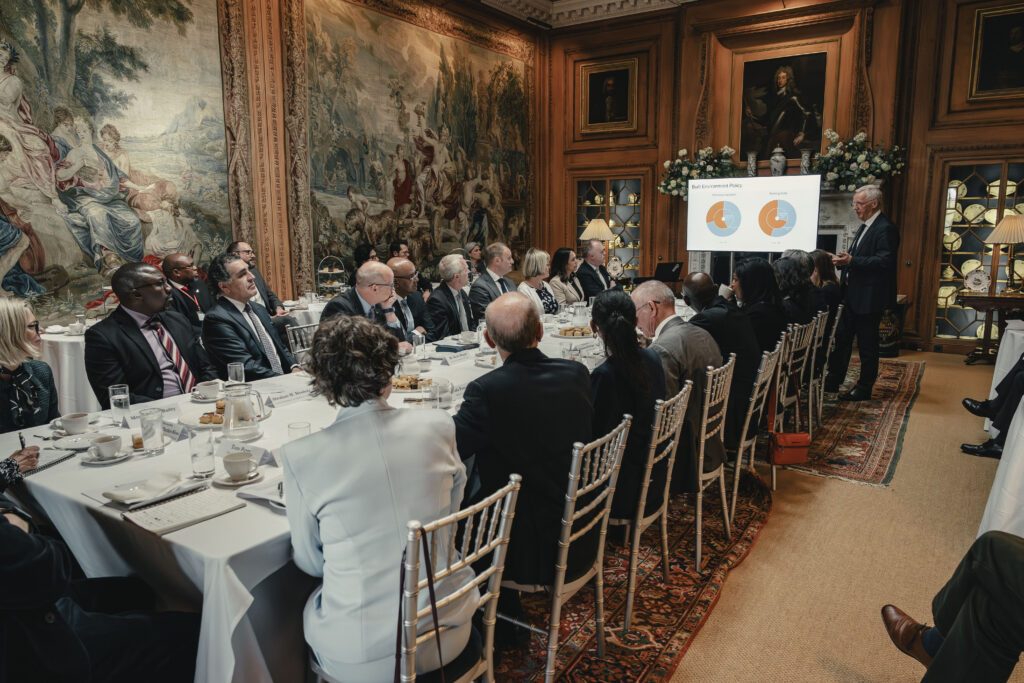
Against the backdrop of Dumfries House, delegates heard a presentation on the scale and urgency of the challenge. The Commonwealth is projected to account for nearly 50% of global urban population increase to 2050 — a doubling from approximately one billion to two billion urban residents in just 25 years. Much of this growth will occur in secondary cities where professional planning capacity is most limited. The presentation highlighted the critical shortage of built-environment professionals across rapidly urbanising Commonwealth countries, the systemic gap between policy ambition and local implementation capacity, and the need for integrated reform across planning, housing, infrastructure and finance — the core argument of the CSCC’s pilot programme funded by the UK’s Foreign, Commonwealth and Development Office.
Commenting on the event, Peter Oborn, CAA Immediate Past President said: “The Dumfries House workshop brought together exactly the combination of practical planning expertise, political commitment and Commonwealth networks that the sustainable urbanisation challenge requires. The Harmonious Urban Growth programme and the CSCC pilot are complementary pieces of the same endeavour, ensuring that cities across the Commonwealth can structure responsible growth before informal settlement patterns become irreversible.”
The workshop concluded with a closing reception hosted by His Majesty King Charles III, reflecting the importance placed on the programme’s ambitions. The reception brought delegates together with His Majesty in an informal setting that underlined the depth of engagement The King’s Foundation has cultivated with Commonwealth partners on these issues.
The CSCC, a collaboration between the Association of Commonwealth Universities, the Commonwealth Association of Architects, the Commonwealth Association of Planners, the Commonwealth Engineers’ Council and the Commonwealth Local Government Forum, is currently planning a programme of further activity ahead of CHOGM 2026, taking place in Antigua and Barbuda from 1-4 November 2026.